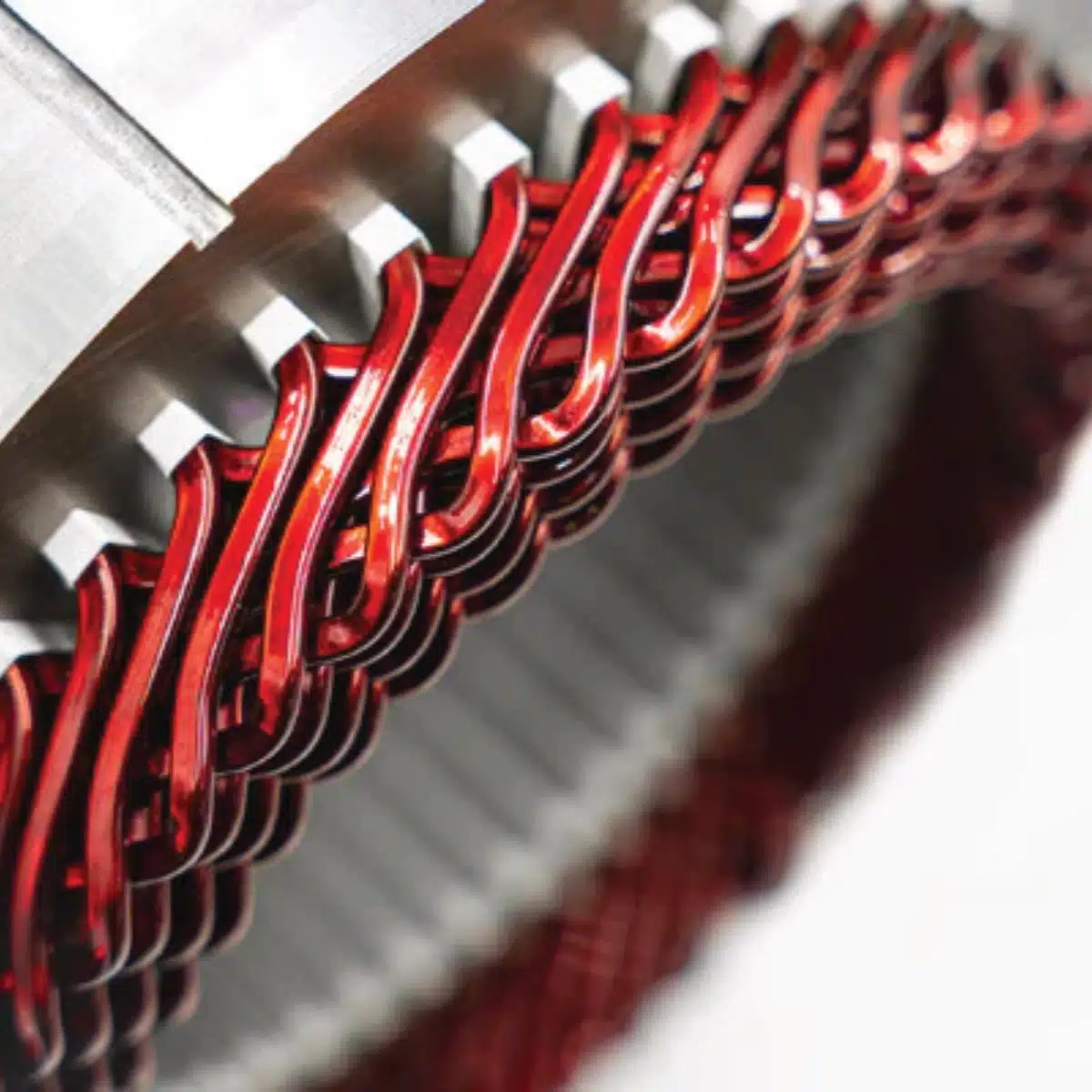
A hairpin motor is an electric motor whose stator is wound with so-called hairpins instead of round wires. Hairpins are rectangular. Their rectangular shape allows for a better fill factor, which means that the copper winding makes better use of the space (around 20%).
Due to the improved fill factor, the additional copper generates a stronger magnetic field. This enables greater rotation of the rotor and more torque at the wheels. A better fill factor means that the stator can be smaller (more compact design with identical performance to conventional wound rotors). The electric motor consumes less energy to deliver the same performance, which increases the vehicle’s range. Hairpin motors have a lower risk of long-term failure. This is because their larger, more solid conductors are less affected by vibrations. Hairpins can transmit more current than round wires. This improved efficiency generates less heat in the winding and motor. This simplifies temperature management, thereby improving the reliability and service life of the motor.
The Altis Sigma was designed from the ground up with a hairpin motor. Every component, from the motor control to the thermal optimization, was designed with the utmost precision and innovation to fully exploit the unique advantages of hairpin technology.
The Sur-Ron Ultra Bee has also been equipped with a hairpin motor since mid-2024. Some may remember that the motor was changed.
In short: more torque, requires less energy to deliver the same performance, longer range, less prone to failure, higher efficiency. All in all, it is the more efficient technology.
